Quick Summary
Proximity affects whether a class actually fits into a family’s routine, since a far gym tends to get skipped more often than a nearby one. Matching a child’s age and personality to the right class matters as much as location does, especially when comparing toddler, preschool, and school-age programs. Families who build classes around an existing routine, like a weekend errand or weekday pickup, tend to stick with gymnastics longer term.
Families living near the park have a different routine than families further out in Queens. Weekend mornings often mean a walk through the park, an errand on Roosevelt Avenue, or a quick trip to the playground before the afternoon gets busy.
Fitting in a structured activity like gymnastics means finding something that works with that rhythm, not against it. At Lana’s Gymnastics Club, we hear from plenty of parents searching for gymnastics classes near Flushing Meadows who want a program that fits naturally into an already full week.
This guide covers what local parents tend to look for when choosing a class, how to think about age groups and scheduling, and what makes a nearby gym worth the trip.
What to Know Before Choosing Gymnastics Classes Near Flushing Meadows
Proximity matters more than people sometimes admit. A gym fifteen minutes away gets used. A gym forty minutes away gets skipped on a tired Tuesday. Families near the park benefit from having options close enough that a missed nap or a late pickup from school doesn’t turn into an entirely missed class.
Beyond location, a few other things tend to shape whether a class actually sticks for a family:
- Class timing that fits schedules: Weekday evenings or weekend mornings work better for most families than mid-day slots that conflict with school or naps.
- Age-appropriate grouping: A three-year-old and a seven-year-old need very different pacing, so classes split by age tend to hold attention better.
- Reasonable class sizes: Smaller groups mean more individual attention from a coach, especially for younger or newer gymnasts.
- Clear communication: Parents want to know what a class actually covers, not just a vague description of “fun and fitness.”
A program that checks these boxes tends to become part of a family’s routine rather than something that gets dropped after a few weeks.
How to Match a Class to Your Child’s Age and Stage
Picking the right class starts with understanding where a child is developmentally, not just how old they are on paper. A toddler who’s still working on basic balance needs something different from a five-year-old ready to learn a cartwheel.
For the youngest gymnasts, our Preschool Gymnastics program is designed for ages 3.5 to 5. Classes at this stage focus on foundational movement, body awareness, and following simple instructions in a setting that feels playful rather than rigid. This is often the right starting point for families near the park whose kids are just beginning to show interest in climbing, jumping, or balancing on their own.
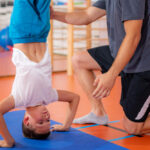
Once a child reaches school age, the options open up further. Our Girls Gymnastics program builds strength, flexibility, and confidence through more structured skill progression. Our Boys Gymnastics program takes a slightly different approach within the same age range, blending traditional gymnastics with parkour-style elements that tend to appeal to boys seeking an active, challenging class.
Matching a child’s personality to the right class style often matters as much as matching their age.
Making Gymnastics Part of a Family’s Weekly Routine
A class that’s easy to reach tends to become part of a family’s normal week instead of a special outing that requires planning. This matters more for younger kids, especially, since consistency builds comfort and routine that helps a child progress steadily rather than starting over after long gaps between classes.
Families near the park often build a class around an existing errand or routine. A Saturday morning class before a trip to the park. A weekday evening session that fits between school pickup and dinner. Finding that natural slot in the week makes it far easier to stick with a program long term.
Finding the Right Fit Close to Home
Choosing a gymnastics class isn’t just about finding the closest option on a map. It’s about finding a program that matches a child’s age, fits a family’s schedule, and feels close enough that getting there doesn’t become its own obstacle. Browsing through Lana’s gymnastics programs gives families a sense of how classes are structured by age, from early movement work through more advanced skill-building, all within reach of the park.
A Local Option Worth a Visit
Families near Flushing Meadows Corona Park don’t need to travel far to find a gymnastics program that fits their child’s age, personality, and weekly routine. The best class is usually the one that’s easy to get to and easy to stick with, week after week.
Curious what a class near the park looks like in person? Contact us today. We’re happy to walk you through scheduling and class options at your convenience.
FAQs
How do I know if a gymnastics class is too far to be practical?
A class that adds significant travel time often gets skipped during busy weeks. A nearby option tends to fit more easily into a family’s existing routine, especially for younger kids with early bedtimes or nap schedules.
At what age should my child start gymnastics near Flushing Meadows?
Many children begin around age three and a half with foundational classes focused on movement and balance. School-age kids, five and up, can move into more structured programs that build strength and specific skills.
Should I choose a class based on my child's age or personality?
Both matter. Age determines readiness for certain skills, while personality affects which class style, like a calmer pace or a more active approach, keeps a child engaged and excited to return.
What makes a gymnastics class easy to stick with long-term?
Classes that fit naturally into an existing routine, like a weekend errand or after-school pickup, tend to stay consistent. Smaller class sizes and clear scheduling also help families commit without added stress.
Are boys' and girls' gymnastics classes different in approach?
Often, yes. Girls’ classes tend to focus on strength, flexibility, and confidence-building, while boys’ classes sometimes incorporate ninja or parkour-style elements for a more active feel. Both build similar foundational skills.