Quick Summary
Flushing parents have plenty of sports options, but the best fit usually comes down to age-appropriate structure, qualified coaching, and room for a child to grow over several years. Gymnastics builds coordination, balance, and focus across a wider range of movement than most single sports, which makes other activities easier to pick up later. The right choice ultimately depends on a child’s personality and what a family hopes they gain, not on which program is most popular.
Parents searching for kids’ sports programs in Flushing, NY, have plenty to choose from these days. Soccer leagues, swim lessons, martial arts studios, and dance classes all compete for a family’s after-school hours, and each one promises something a little different.
At Lana’s Gymnastics Club, we hear from families weekly who are trying to figure out which activity best fits their child. The answer usually depends on what a parent hopes to build beyond just keeping a kid busy.
This guide walks through what makes a sports program worth a family’s time, what Flushing parents typically look for, and why gymnastics tends to check more boxes than people expect.
What Makes Kids’ Sports Programs in Flushing, NY Worth Considering
Flushing is a neighborhood with a packed calendar of options for young athletes, and that’s a good thing for families who want variety. The challenge isn’t finding a program. It’s finding one that matches a child’s age, personality, and developmental stage.
A few qualities separate a program worth signing up for from one that’s just filling a time slot:
- Age-appropriate structure: Classes designed around a specific age range tend to hold a child’s attention better than mixed-age groups. In these groups, some kids tend to get bored, and others are overwhelmed.
- Qualified coaching: Instructors with real training and certifications notice things that untrained coaches miss, such as a child compensating for weak balance or losing focus halfway through a drill.
- Safety standards: Padded equipment, supervised transitions, and clear class size limits matter more than they get credit for, especially with younger children.
- Room to grow: A program that only offers one level often means switching gyms or studios every year or two as a child improves.
- Consistent skill progression: Classes that build on previous lessons week to week, instead of repeating the same activities, keep kids engaged longer.
These factors apply across nearly any sport, but they’re worth keeping in mind no matter where a family lands.
Why Gymnastics Stands Out Among Other Youth Sports
Gymnastics asks something different of a young body than most other activities do. A soccer player runs and kicks. A swimmer moves in one consistent stroke pattern. On the other hand, a gymnast balances, rotates, jumps, climbs, and holds positions that train strength and control in nearly every direction at once.
Range is part of what makes the sport such a strong starting point for young athletes who haven’t settled on one activity yet.
A Wider Range of Physical Skill Development
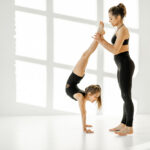
This range of movement gives gymnastics an edge for early physical development. Coordination, balance, flexibility, and body awareness all improve together rather than in isolation. These are the same foundational skills that carry over into other sports later on.
A child who spends a few years in gymnastics often picks up other activities, like dance, basketball, or martial arts, more easily because the body already understands how to move and adjust. Coaches often notice this when a child transitions from gymnastics to a new sport and adapts to the demands of footwork or balance faster than a beginner typically would.
Building Focus and Mental Discipline Early
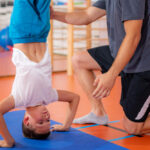
Gymnastics also tends to build mental discipline in a way that’s easy to overlook. Holding a handstand or balancing on a beam requires patience and focus that don’t come naturally to most young children at first.
Over time, that patience becomes a habit that shows up in other parts of a child’s life, from sitting through homework to following multi-step instructions at home. This carryover is one of the reasons parents often mention noticing changes outside the gym, not just inside it.
Programs Designed for Girls and Boys
For families with daughters, our Girls Gymnastics program for ages five and up focuses on building strength, flexibility, and self-confidence alongside physical skills.
For families with sons, our Boys Gymnastics program blends gymnastics fundamentals with elements of ninja training and parkour. These classes tend to appeal to boys who want a class that feels active and challenging from the first day. Having both options under one roof means siblings can train at the same facility, even if their classes look a little different.
How Gymnastics Compares to Other Popular Sports for Kids
Parents often ask how gymnastics stacks up against the other activities filling up Flushing’s sports calendars. Each sport offers something valuable, and the comparison usually comes down to what a family hopes their child will gain. Looking at a few side-by-sides helps clarify where gymnastics fits into the bigger picture.
- Soccer and Team Sports
Soccer and other team sports are great for social skills and teamwork, since kids learn to communicate, pass, and work toward a shared goal early on. Younger children sometimes struggle with the rules and pacing of a full game, though, which can make the first season or two feel more confusing than fun.
Gymnastics classes tend to break skills into smaller, clearer steps, which can ease a young child into structured activity before jumping into a team sport.
- Swimming
Swimming is excellent for cardiovascular fitness and water safety, two things every family values regardless of what other sports a child plays. It doesn’t build the same upper-body strength or balance work that gymnastics does, though, since most of the movement happens in one plane through the water. Many families find that pairing gymnastics with swim lessons covers both strength and water safety without overloading a child’s schedule.
- Martial Arts
Martial arts are strong for discipline and focus, with some overlap in body control and balance work. Gymnastics tends to offer more variety in movement patterns. Routines move through balance, rotation, and strength elements within a single class rather than repeating a narrower set of techniques.
Kids who enjoy the structure of martial arts often take well to gymnastics for the same reason: the clear progression from one skill to the next.
- Dance
Dance builds flexibility and rhythm well and gives kids a creative outlet that gymnastics doesn’t always emphasize as much. Gymnastics adds strength training and spatial awareness that dance classes don’t always cover, particularly around balance and body control during fast transitions.
Some families find that early childhood gymnastics makes the transition to dance later on smoother, since flexibility and coordination are already part of a child’s foundation.
None of these comparisons suggests one sport is better across the board. A child who loves the water belongs in a pool, and a child who lights up at the idea of a game with teammates belongs on a field. Gymnastics simply offers a broader foundation that tends to make other sports easier to pick up later.
Finding the Right Program for Your Child’s Age and Personality
Every child responds differently to structure, movement, and group settings. Matching a program to a child’s personality matters as much as matching it to their age. A naturally cautious child might need a slower introduction to new skills, while a more adventurous child might get bored without enough challenge.
Watching how a child reacts during a trial class often tells parents more than a website ever could.
Does the child seem comfortable taking instruction from a coach? Do they get frustrated quickly when a skill doesn’t come right away, or do they keep trying? These small observations help families figure out which environment will actually hold a child’s interest over time.
Browsing through Lana’s gymnastics programs gives parents a sense of how classes are structured by age, from toddlers just beginning to explore movement through more advanced skill-building for older kids. Having that full pathway in one place means a family doesn’t need to start over at a new gym every time their child outgrows a class.
Choosing What Fits Your Family Best
Flushing families have no shortage of sports options, and that’s worth appreciating rather than feeling overwhelmed by. The best program isn’t necessarily the most popular one or the one with the longest waitlist. It’s the one that matches a child’s developmental stage, holds their attention, and gives them room to keep growing without switching programs every year.
Gymnastics happens to check a lot of those boxes at once. It helps build strength, coordination, and focus while staying flexible enough to suit kids who eventually branch out into other sports, too.
Trying to decide what’s right for your child? Contact our team, and we’ll do our best to help you figure out which class best fits your family’s schedule and your child’s personality.
FAQs
At what age should my child start a sports program in Flushing?
Many children begin structured activities between the ages of three and five, though readiness varies by child. Gymnastics programs often start even earlier with toddler classes, since the skills build gradually as coordination develops.
Is gymnastics a good first sport for kids?
Gymnastics builds balance, strength, and body awareness across multiple movement patterns, which often makes other sports easier to learn afterward. It works well as a first sport because classes are typically organized by age and skill level.
How do I know if a sports program is a good fit for my child?
Watch how a child responds to instruction and new challenges during a trial class. A good fit usually means the child stays engaged, follows the coach comfortably, and shows interest in trying skills again after a setback.
What is the difference between gymnastics and other youth sports?
Gymnastics trains strength, flexibility, balance, and coordination all at once, whereas many sports focus on a single movement pattern. This broader foundation is one reason gymnastics often complements other activities a child takes on later.
Should boys and girls take different gymnastics classes?
Many gyms offer separate classes for boys and girls to accommodate different interests and paces. Boys’ classes often include elements like parkour or ninja-style training, while girls’ classes tend to emphasize strength, flexibility, and confidence-building.