Quick Summary
Gymnastics works best when it grows with a child instead of asking them to switch programs every few years. Coaching consistency, neighborhood familiarity, and a clear path from toddler classes to advanced skills matter more to families than any single class or trend. Readiness for gymnastics shows up early, often through steady walking and curiosity about climbing or jumping, and starting at the right developmental stage matters more than starting at a specific age.
Three decades is a long time to stay in one neighborhood, let alone one industry. At Lana’s Gymnastics Club, we’ve watched kids learn their first cartwheel and later bring their own children through the same doors. Being a gymnastics club in Queens, NY, for 30 years has earned our trust, which speaks to consistency. It also says something about what families look for when choosing a place for their child to grow.
This is a story about what makes a gym worth sticking with for years.
What Makes a Gymnastics Club in Queens, NY, A Trusted Choice for 30 Years
Word of mouth is still the strongest form of marketing, especially in a tight-knit borough like Queens. Parents talk to other parents at pickup, at birthday parties, and in line at the grocery store. If a gym isn’t delivering, that conversation dies quickly.
A few things tend to come up when families describe a gym worth recommending:
- Coaching consistency: Kids see the same coach week after week, building trust instead of starting over with a stranger every session.
- Clear communication: Parents know what their child is working on and what comes next.
- A sense of belonging: The gym feels like an extension of the neighborhood.
- Safety as a given: Certified coaches and proper equipment are the baseline.
Families don’t usually choose a gym because of one perfect class. They choose it because the small things add up over months and years. Lana’s gymnastics programs were designed around that idea from the start, with a structure that lets kids progress without switching gyms or having to start from scratch somewhere new.
The Toddler Years Set the Tone for Everything After
Gymnastics often starts earlier than parents expect. A toddler who’s just learning to balance on one foot is already developing coordination and body awareness. Those skills show up later in sports, dance, or simply running around the playground without falling every five minutes.
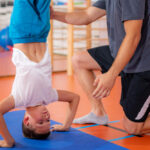
The earliest classes are about exposure. A toddler swinging on a bar with help, rolling across a mat, or learning to follow simple instructions in a group setting is absorbing more than it looks like from the sidelines. Programs like our Tiny Tots classes focus on this groundwork. They give little ones a low-pressure space to explore movement before structured skills enter the picture.
Parents sometimes worry their child is too young or too unfocused for a class like this. The format is designed around short attention spans and big bursts of energy. Nobody expects a two-year-old to sit still and listen for thirty minutes straight.
Preschool Gymnastics: Where Confidence Starts to Show
Somewhere between ages three and five, something shifts in how kids carry themselves physically. They start trying things on their own instead of needing a hand to hold. They notice when they land a jump cleanly. They get proud of small wins.
Preschool gymnastics classes meet kids at exactly this stage. The structure leans more into following directions, taking turns, and building basic skills on bars, beam, and floor, but the tone stays playful enough that it never feels like a chore. Coaches at this age level are trained to read a room of four-year-olds and adjust on the fly, since no two groups behave the same way on a given Tuesday.
This is also the age when social skills start to matter as much as physical ones. Taking turns on the balance beam, cheering for a classmate who finally nails a skill, waiting patiently while the coach helps someone else first. These lessons stick with kids well past the gym walls.
Why Longevity in a Neighborhood Gym Matters
A gym that’s been around for thirty years has seen trends come and go. It’s adjusted to new safety standards, new coaching methods, and new generations of parents with different expectations than the ones before them. None of that happens by accident, and none of it happens overnight.
Longevity also has practical implications for families. Older siblings and younger siblings can train under the same roof instead of bouncing between programs. Coaches who’ve been with the gym for years know how to communicate with parents who’ve been bringing kids in since the program started. There’s a rhythm to it that newer gyms haven’t had time to develop yet.
Driving into Manhattan for a weekly class adds time, stress, and cost that most families would rather avoid. A neighborhood gym means a shorter commute, more flexibility around school pickup, and a community that overlaps with school friends, sports teams, and weekend plans.
How to Know If Your Child Is Ready to Start
Parents often ask when the right time is to enroll a child in gymnastics. There isn’t a single age that works for everyone, but a few signs tend to point toward readiness:
- Walking steadily: Usually around 18 months, this signals enough balance and coordination for toddler classes.
- Following simple instructions: A child who can respond to “stop” or “come here” reliably is often ready for group settings.
- Curiosity about movement: Climbing, jumping off low steps, or trying somersaults on the living room floor are good indicators.
- Comfort being away from a parent briefly: Some classes involve short separations, even if a parent stays nearby.
There’s no need to wait for a child to seem advanced. Gymnastics classes are designed to start wherever a child currently is and build from there.
Choosing a Gym That Grows With Your Child
Picking a gym is about finding a program that can grow alongside them for years, from those first wobbly toddler steps onward.
Families who’ve stayed with us for years often mention this exact thing. They never had to leave to find the next stage of training. Continuity is something we’ve shaped our entire program structure around.
Considering gymnastics for your child? Reach out to our team today, and we’ll help you figure out where to start.
FAQs
At what age should my child start gymnastics?
Most toddlers are ready around 18 months once they’re walking steadily. Readiness depends more on coordination and curiosity about movement than on hitting an exact age.
Is gymnastics safe for toddlers?
Yes, toddler classes are built around short attention spans and low-pressure movement. Certified coaches guide each activity, and equipment is sized appropriately for younger children.
How is preschool gymnastics different from toddler classes?
Preschool classes introduce more structured skills on bars, beam, and floor. Kids also start practicing following directions and taking turns, alongside the physical work.