

The Powerful Effects Of Gymnastics On Flexibility And Movement
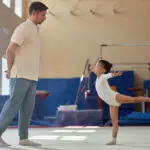
Gymnastics develops flexibility and movement by combining controlled exercises, balance challenges, and dynamic motion sequences that engage the entire body simultaneously. Children who participate in gymnastics strengthen muscles, improve coordination, and gain heightened awareness of their own movements. Flexibility enhances performance across other physical activities, including sports, dance, and daily mobility.
With Lana’s Gymnastics Programs, students of all ages refine their abilities under professional guidance, applying disciplined routines that support overall growth while encouraging self-confidence and precise movement.
How Gymnastics Shapes Flexibility
Flexibility involves the ability to move joints and muscles through a full range of motion. In gymnastics, stretching exercises combined with technique training gradually lengthen muscles and enhance joint mobility. Children who practice regularly experience improved posture and reduced risk of injuries, as their muscles adapt to dynamic and static positions. Structured routines in preschool gymnastics introduce early learners to controlled stretches, balance challenges, and safe floor exercises that gradually expand their flexibility and comfort with new movements.
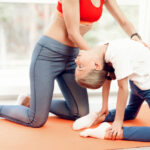
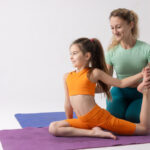
Repetitive movements in gymnastics, such as splits, bridges, and kicks, encourage muscles to adapt to extended ranges without strain. Coaches focus on safe progression, monitoring technique to avoid overextension. Over time, children develop not only increased physical flexibility but also stronger mind-body awareness, allowing them to coordinate complex movements with confidence. This combination of flexibility and control forms a foundation for advanced athletic skills in other physical activities throughout life.
Movement Awareness and Spatial Control
Gymnastics also develops proprioception, the awareness of body position in space. Activities that require flipping, balancing, or rolling challenge the nervous system to coordinate muscle groups efficiently. Children learn how to adjust their center of gravity, maintain stability, and move smoothly through various positions. This ability transfers to everyday activities, improving agility, balance, and posture.
Spatial awareness in gymnastics encourages children to navigate obstacles and predict body placement during dynamic exercises. These skills foster confidence, reduce fear of movement, and create a foundation for complex physical performance. Coaches integrate equipment like balance beams, vaults, and bars to challenge spatial perception, teaching children how to align their bodies precisely while executing motions safely and efficiently.
Strength Development Complements Flexibility
Flexibility alone cannot support sustained movement; muscular strength is essential. Gymnastics trains multiple muscle groups simultaneously, reinforcing the strength needed to control flexible joints. Core strength, leg power, and upper body conditioning allow children to hold extended positions and execute controlled rotations. Strength training in gymnastics complements stretching, producing balanced bodies capable of performing complex skills without compromising joint safety or stability.
At Lana’s Gymnastics Club, training programs adapt exercises to different age groups and skill levels. Toddlers engage in gentle floor routines that promote foundational strength, while older children combine stretches with strength challenges using bars, beams, and floor apparatus. The integration of strength and flexibility contributes to efficient movement patterns, supporting long-term physical development and minimizing the risk of overuse injuries.
The Role of Repetition in Skill Mastery
Repetition plays a central role in gymnastics training, strengthening both flexibility and coordinated movement. Children perform sequences multiple times, gradually increasing precision and fluidity. This structured repetition reinforces muscle memory, making movements more natural and automatic.
As children progress from Preschool Gymnastics to recreational and competitive programs, repetition introduces complex combinations of jumps, flips, and balances that challenge flexibility while cultivating mental focus and persistence.
Repeated practice also builds confidence. By mastering progressively challenging movements, children gain pride in their abilities. Coaches at Lana’s Gymnastics Club design sequences that balance repetition with variety, maintaining engagement while developing precise control over flexibility and motion.
Coordination Between Upper and Lower Body
Gymnastics demands synchronized coordination between the upper and lower body. Movements like handstands, cartwheels, and aerial maneuvers require controlled arm strength, leg extension, and core stability. Developing flexibility without corresponding strength limits performance, while combining both allows smooth transitions between poses and dynamic actions. Coaches at Lana’s Gymnastics Club emphasize integrated training that synchronizes flexibility, strength, and motor control for all students.
Children who train consistently develop more efficient movement patterns. The coordination cultivated in gymnastics supports sports performance, dance, and general physical confidence. Students also learn how to adjust timing, force, and alignment, improving overall agility and body awareness.
Mental Focus Supports Physical Performance
Flexibility and movement improvements in gymnastics are closely linked to mental engagement. Children must concentrate on precise body positioning, breathing, and sequence timing to execute skills correctly. This focus enhances neuromuscular control, reinforcing flexibility gains while reducing the risk of strain. Attention to detail in movement builds cognitive skills such as planning, problem-solving, and perseverance, which extend to academic and social contexts.
Structured guidance in Lana’s Gymnastics Programs encourages students to focus on incremental improvement. Coaches celebrate achievements and guide corrective techniques, fostering a positive mindset that reinforces the connection between mental effort and physical development.
Age-Specific Program Design
Setting achievable goals within gymnastics training fosters motivation and self-assurance. Children work toward mastering routines step by step, understanding that success requires effort and persistence.
Celebrating small accomplishments reinforces a sense of competence and determination. Coaches guide children to set realistic objectives while challenging them to expand their abilities, which strengthens intrinsic motivation.
This process helps children recognize personal growth over time, building confidence in both their physical and emotional capacities.
Coping With Failure in a Safe Environment
Lana’s Gymnastics Club tailors programs according to age and skill level, recognizing that developmental stages influence flexibility and movement capacity. Young children in preschool gymnastics participate in activities that support motor skill acquisition and gentle stretching.
Elementary-age participants progress to structured recreational gymnastics that integrates strength, flexibility, and coordination. Competitive-level students engage in intensive routines designed to refine advanced movements, maximize range of motion, and promote precise execution under expert supervision.
Age-specific programming maintains safety while challenging children appropriately. Coaches adjust techniques, duration, and intensity, making progression natural and measurable. This method builds long-term physical competence while cultivating an appreciation for disciplined practice.
Injury Prevention Through Controlled Movement
Developing flexibility without control increases the risk of injury. Gymnastics teaches children to move through extended ranges safely, integrating alignment, core engagement, and spatial awareness. Techniques such as proper landing, gradual stretching, and joint stabilization reduce strain on muscles and ligaments. Children learn how to listen to their bodies, improving self-awareness while maintaining safe, controlled movement.
Supervised sessions at Lana’s Gymnastics Club combine warm-up routines, progressive stretching, and functional strength exercises. These protocols support flexibility goals while minimizing potential harm, making gymnastics a sustainable activity that contributes to lifelong movement health.
Long-Term Physical Benefits
The effects of gymnastics on flexibility extend beyond immediate skill gains. Children who engage in consistent training develop lifelong patterns of good posture, balanced muscle tone, and fluid movement.
Flexible and coordinated bodies support a variety of activities, including swimming, dance, team sports, and general physical fitness. Early exposure to gymnastics promotes joint health, muscle elasticity, and core stability, contributing to overall wellness and physical confidence.
Cognitive and Social Advantages
Flexibility and movement improvements in gymnastics are intertwined with cognitive and social development. Coordinated sequences require planning, memorization, and problem-solving, stimulating neural pathways.
Students interact in supportive group settings, learning teamwork, communication, and respectful participation. By mastering physical challenges, children gain self-esteem, resilience, and a sense of accomplishment, reinforcing positive behaviors that extend beyond the gym.
Personalized Coaching Enhances Results
Individual attention accelerates flexibility and movement gains. Coaches at Lana’s Gymnastics Club observe each child, correct technique, and adjust exercises to match abilities. Personalized instruction helps prevent strain, reinforces good form, and encourages gradual progression. Children develop confidence through targeted guidance, creating a positive association with physical achievement and long-term skill acquisition.
The effects of gymnastics on flexibility and movement extend beyond physical ability, supporting cognitive growth, social interaction, and mental focus. Children develop strength, coordination, balance, and confidence while mastering a wide range of skills. Age-specific programming, structured repetition, and expert coaching create a well-rounded framework for sustained physical development.
At Lana’s Gymnastics Club, our dedicated instructors guide students from preschool gymnastics through advanced programs, emphasizing precise movement, strength, and confidence in every session. Our Queens-based facility offers professional equipment and a supportive community, helping children develop flexibility and motor skills that carry into all aspects of life.
- Announcements (2)
- Competion Program (2)
- Competitive Gymnastics (5)
- Gymnastics For Kids (24)
- Local Queens / Flushing (5)
- Parent Education (6)
- Preschool Gymnastics (6)
- Recreational Gymnastics for Kids (5)
- Tiny tot (1)
- Toddler & Preschool (7)
- Toddler & Preschool Gymnastics (3)
- Toddlers (1)
- Updates (1)
- Vacations and Holidays (1)
Need Help?
Lorem ipsum dolor sit amet, consectetur adipiscing elit. Ut elit tellus, luctus nec ullamcorper mattis, pulvinar dapibus leo.