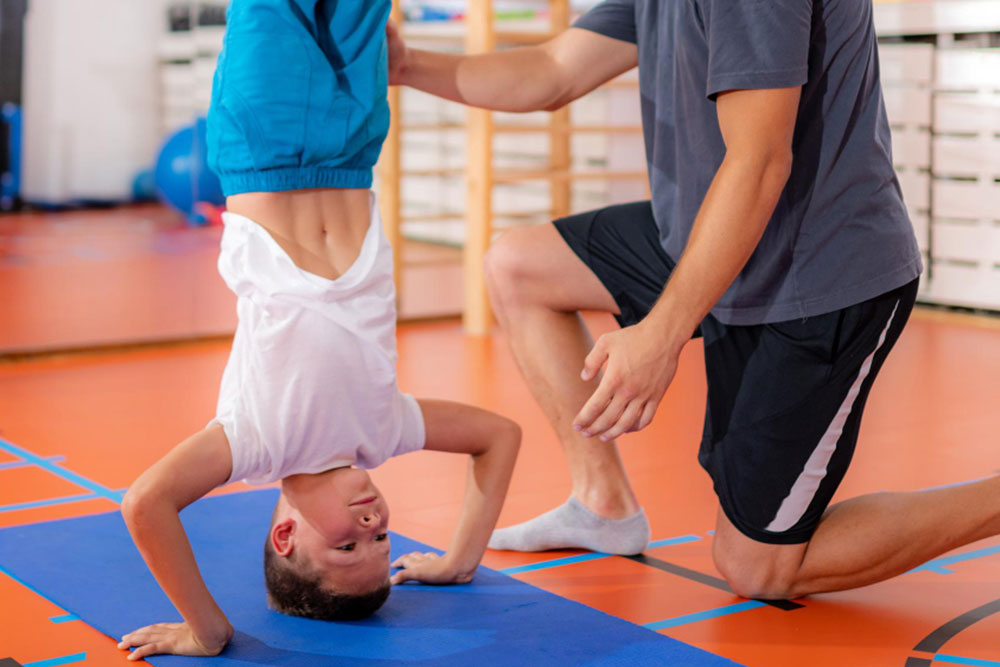
Quick Summary
Boys’ gymnastics training uses a distinct mix of apparatus work, obstacle-style movement, and strength-building drills that differ meaningfully from girls’ programs and from most other youth sports. This approach develops upper-body strength, explosive power, and body control in ways that carry directly into other athletic pursuits. Queens gyms that understand these differences tend to produce boys who stick with the sport longer and progress faster through skill levels.
Parents searching for boys gymnastics training in Queens often assume the classes look like a smaller version of what their daughter or niece does down the street. That assumption misses something. Boys’ programs are built around a different set of apparatus, a different pacing, and often a different set of goals entirely.
Rings, parallel bars, pommel horse work, and vault sit alongside floor exercise, and the training style leans into strength and explosive power far more than the girls’ side of the sport does. Even the warm-ups look different, built around grip strength and shoulder stability instead of flexibility drills alone.
Understanding these differences helps parents pick a program that actually fits how their son moves and learns, instead of settling for whatever class happens to have an open spot.
Different Apparatus, Different Skills
Girls’ gymnastics centers on four events: vault, bars, beam, and floor. Boys’ gymnastics runs on six: floor, pommel horse, still rings, vault, parallel bars, and high bar. That extra range changes everything about how a class is structured. Pommel horse work builds circular hip and shoulder strength that shows up nowhere else in youth sports. Still rings demand a level of upper-body and core control that few other activities touch at all, since a child has to stabilize his entire body weight using only his arms and shoulders.
Parallel bars add another layer, teaching boys to support their weight on straight arms while swinging and shifting positions mid-movement. High bar introduces the sensation of momentum and release, which takes real trust in a coach and in the training progression before a child ever attempts it solo. This is part of why boys’ programs tend to introduce strength conditioning earlier and more directly than girls’ classes. A coach isn’t guessing when they add push-up variations, hollow-body holds, or hanging leg raises into warm-ups. These movements build the specific strength a boy needs before he ever touches rings or parallel bars for real skill work.
The Ninja-and-Parkour Influence
Modern boys artistic gymnastics in NYC has picked up heavy influence from ninja-warrior style obstacle courses and parkour movement. Traditional apparatus training still forms the backbone of most programs, but many gyms now blend in climbing walls, cargo nets, balance beams set at odd angles, and jumping sequences that feel more like an adventure course than a formal gymnastics lesson.
This blend works because it keeps a boy’s attention locked in during the early years, before he’s built the patience for repetitive drilling. A child who might get bored running the same floor routine ten times stays engaged when that same skill gets folded into an obstacle challenge. Coaches use this to their advantage, sneaking in strength and coordination work disguised as play. A warped-wall attempt looks like pure fun to a seven-year-old, but underneath it, he’s building the same leg drive and grip strength he’ll need for vault two years later.
Strength Training Built Into the Program
Boys’ bodies respond differently to training loads than girls’ bodies at the same age, particularly once a boy hits his growth years. Coaches who specialize in boys programs adjust conditioning accordingly, layering in bodyweight strength work that scales with a child’s age and ability. This isn’t about pushing kids into adult-style weightlifting. It’s about controlled, age-appropriate strength building that supports the specific demands of rings, pommel horse, and high bar.
A well-run boys gymnastics program tracks this progression closely. A six-year-old might work on basic hangs and simple supports on rings, while a ten-year-old moves into strength holds and basic swings. Coaches log this progress the same way a physical therapist would, watching for imbalances between the left and right side of the body before adding new load. That gradual buildup keeps injury risk low while still developing real strength over time, and it gives parents a clear picture of how their son is advancing beyond just having fun.
Discipline and Focus Through Structure
Boys’ gymnastics leans heavily on sequential skill-building. A child can’t move to a giant swing on high bar until he’s mastered a basic hang and pullover. That structure teaches patience in a way few other youth activities do, since progress is visible, measurable, and earned one step at a time.
Coaches often notice that this structure spills over into other areas of a boy’s life. Kids who train consistently in gymnastics tend to show better focus during multi-step tasks elsewhere, whether that’s homework or another sport’s practice drills. The discipline required to master a still rings hold or a pommel horse circle doesn’t stay in the gym. Parents frequently mention their son sitting still longer at the dinner table or following multi-step chores without needing constant reminders, small shifts that trace back to the same patience built on the mat.
How This Foundation Carries Into Other Sports
Many parents enroll their son in gymnastics as a supplement to another sport, and the crossover benefits show up fast. The core strength built through hollow-body holds and ring work translates directly into throwing power for baseball and paddling strength for swimming. The body awareness developed on beam and floor helps with footwork in soccer and basketball, since a boy who understands where his body is in space reacts faster and falls less often.
Coaches at other sports notice this too. A young athlete who trains gymnastics alongside his main sport often stands out for his balance and his ability to control awkward landings, whether that’s coming down from a rebound or recovering after a slide tackle. Few youth activities build this kind of transferable athleticism as efficiently as structured gymnastics training does.
What Queens Parents Should Look For
A handful of details separate a strong program from a mediocre one:
- Coaches with genuine experience in boys’ events, not a generalist background
- Access to all six apparatus, not just floor and vault
- Age-appropriate strength conditioning built into class structure
- A pace that keeps energy high without cutting corners on technique
- Clear communication about how skills build toward the next level
Programs missing several of these often plateau boys at a beginner level, since the equipment or coaching expertise simply isn’t there to push skills further. A quick conversation with a gym’s coaching staff usually reveals how deep their boys-specific knowledge actually runs. Ask what a typical six-month progression looks like on rings or pommel horse. A coach who answers with specifics, rather than vague reassurances, is usually one worth trusting with your son’s training.
Train With Coaches Who Understand Boys’ Gymnastics
At Lana’s Gymnastics Club, our boys program was built from the ground up around the six-event structure that real artistic gymnastics for boys demands, not a scaled-down version of a girls’ class. Our coaching staff brings decades of hands-on experience with rings, pommel horse, parallel bars, and high bar, paired with the ninja-and-parkour energy that keeps young athletes excited to show up.
We’ve spent over 30 years in Flushing helping boys build strength, discipline, and confidence one skill at a time, and our state-of-the-art equipment gives every child room to progress safely at his own pace. Our coaches track each boy’s progression closely, so you’ll always know exactly how your son is advancing and what comes next. If you’re ready to see what real boys’ gymnastics training looks like, bring your son in for a class and watch him find his footing on the mat.
Reach out to us today.
FAQs
What's the difference between boys' and girls' gymnastics?
Boys compete in six events (floor, pommel horse, rings, vault, parallel bars, high bar) while girls compete in four (vault, bars, beam, floor). The apparatus and required strength differ significantly between the two.
At what age should my son start gymnastics?
Most boys begin structured training around age 5, though younger children can start with introductory movement classes to build early coordination.
Is strength training safe for young boys?
Yes, when it’s age-appropriate and coach-supervised. Programs use bodyweight conditioning scaled to a child’s development, not adult-style lifting.
Do boys need prior experience to join a gymnastics class?
No. Most programs welcome complete beginners and structure classes so kids progress at their own pace, regardless of starting skill level.