Quick Summary
A boy’s path in gymnastics moves through clear stages, each one built on the strength, technique, and discipline earned in the stage before it. Fundamentals, apparatus-specific conditioning, and steady, measurable progress count for more at every stage than shortcuts or comparisons to other gymnasts. Understanding this progression helps families set realistic expectations and recognize genuine advancement when they see it.
At Lana’s, we see a boy’s path in gymnastics move through clear stages, each one built on the strength, technique, and discipline earned in the stage before it. Fundamentals, apparatus-specific conditioning, and steady, measurable progress count for more at every stage than shortcuts or comparisons to other gymnasts. We help families understand this progression so they can set realistic expectations and recognize genuine advancement when they see it.
Families who bring their sons into our beginner classes often ask what it truly takes to reach a higher level in boys competitive gymnastics in Queens, NY. Our honest answer involves years of layered skill-building, not a fast track. Every elite gymnast started with the same basic hang on the bar or the same wobbly cartwheel that every beginner learns first, and we have watched that happen thousands of times over the years.
Starting Point: Building the Fundamentals
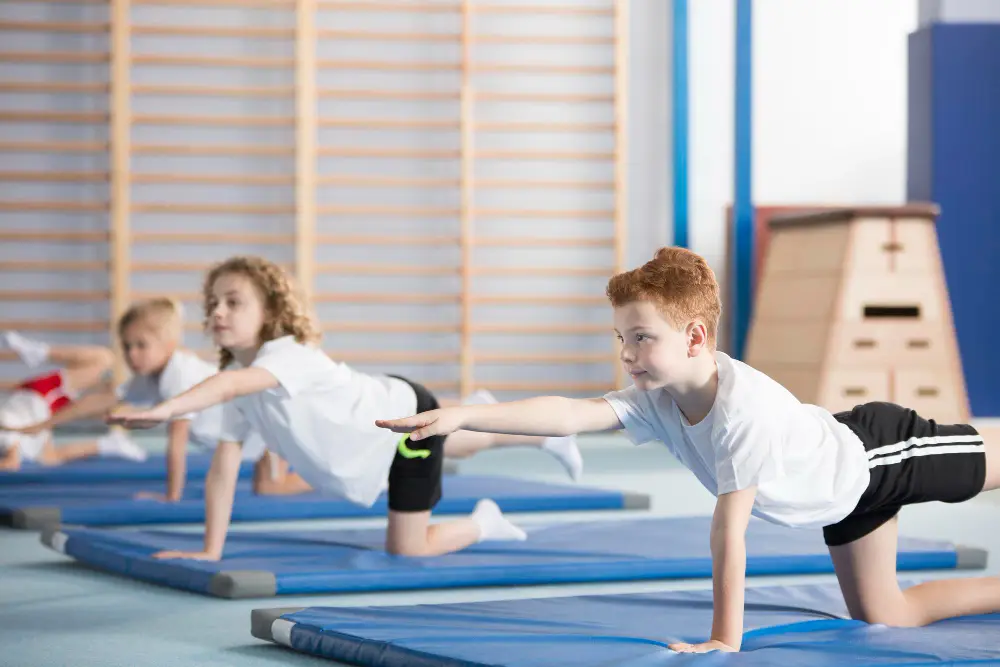
Every boy who joins our program begins in the same place, learning body control through simple movements like rolls, basic jumps, and beginning bar hangs. This stage looks unglamorous, but it builds the raw material every later skill depends on. Our coaches spend this phase watching closely for strength imbalances, flexibility gaps, and coordination issues that could slow progress later if left unaddressed.
Patience counts for more here than speed. A boy who rushes past fundamentals to chase harder skills often builds shaky technique that becomes harder to correct the further he advances. Our coaches insist on mastering the basics first, because we know that is what truly serves a boy well down the road, even when it feels slow in the moment.
The Skills That Separate Recreational From Advanced
Boys’ gymnastics runs on six events: floor, pommel horse, still rings, vault, parallel bars, and high bar. Our recreational classes introduce all six at a basic level, giving a boy exposure to each apparatus and a sense of where his strengths lie. Advanced training narrows that focus, building deep proficiency in specific skills within each event rather than a broad but shallow introduction.
This is where our strength conditioning becomes far more targeted. A boy working toward advanced pommel horse skills needs specific circular hip and shoulder strength that a general fitness routine will not build on its own. Our coaches, who specialize in these events, design conditioning drills around the exact demands of each apparatus, layering complexity as a boy’s body and skill level allow.
How We Measure Progress Along the Way
We almost never see a boy’s advancement come down to a single dramatic breakthrough. It shows up in small, measurable improvements: holding a support position a few seconds longer, completing a swing with cleaner form, or sticking a landing that used to end in a stumble. Our coaches track this kind of incremental progress closely, so we can tell parents exactly where their son stands and what comes next, rather than offering vague reassurance that everything looks great.
Video review has become a useful tool at this stage too. Recording a skill attempt and comparing it side by side with an earlier version often reveals progress that is hard to notice in the moment, especially for parents watching from the sidelines. We use this kind of comparison during parent conversations to make growth visible in a concrete way.
Age also plays a role in how quickly a boy moves through these stages. A seven-year-old and an eleven-year-old working on the same skill may progress at very different rates, not because one is more talented, but because bone growth, strength, and coordination develop on their own individual timeline. Our coaches account for this rather than comparing boys directly against each other.
What Competitive-Level Training Generally Requires
A genuine boys gymnastics competition program, wherever a family finds one, typically demands a serious increase in training hours, coach specialization, and structured skill assessments that track a gymnast through defined levels. Programs at this level usually require boys to demonstrate mastery of specific required skills before advancing, similar to a belt system in martial arts. Meets and competitions become part of the calendar, giving boys a chance to test their training against other gymnasts and receive feedback from judges outside their home gym.
Not every boy needs or wants to reach this level, and that is completely fine with us. Our recreational training still builds real strength, discipline, and confidence without the added time commitment competitive training requires. We have honest conversations with families about what a realistic timeline and commitment truly look like before anyone jumps in.
Building Toward a Boys Gymnastics Team in Flushing, NY
For families whose sons show real interest and aptitude for advanced training, the path forward with us usually involves closer coaching relationships, more frequent sessions, and a gradual increase in skill difficulty across all six events. We build this transition carefully, watching for signs of overtraining or burnout rather than pushing every eager child toward advanced skills too quickly.
Communication between our coaches and parents becomes especially important at this stage. We explain exactly what skills a boy needs to master before moving forward, and roughly how long that typically takes, so families get a much clearer picture than vague encouragement alone.
Keeping a Growing Body Healthy Under Higher Training Loads
As training hours increase, so does the importance of recovery and injury prevention. Boys moving toward advanced skill levels need adequate rest between sessions, proper warm-ups that prepare joints and muscles for higher-intensity work, and coaches who recognize the early signs of overuse before they turn into real injuries. We ask parents to flag a slight limp, a lingering complaint about a sore wrist, or a sudden drop in enthusiasm for a specific skill right away rather than waiting to see if it resolves on its own.
Nutrition and sleep carry more weight at this stage too, though not in a way that requires anything complicated. Growing boys training several hours a week simply need enough fuel and rest to recover between sessions, and our coaches offer general guidance on keeping up with that increased physical load.
What We Watch For As a Boy Advances
A few signs tell us a boy is progressing in a healthy, sustainable way:
- Steady mastery of new skills rather than skipped steps
- Genuine enthusiasm for practice, not just for competition outcomes
- Coaches who explain the reasoning behind training decisions
- A balance between challenge and confidence, so a boy stays motivated instead of discouraged
When we see these signs, we know a boy is on a solid path, from competitive-level training to simply continuing to build skill and strength for the love of the sport. Either outcome reflects real, lasting progress in our eyes.
Building the Foundation at Lana’s Gymnastics Club
At Lana’s Gymnastics Club, we built our boys program to give every child a real foundation in all six gymnastics events, taught by coaches with decades of hands-on experience and national-level training backgrounds.
Our coaching staff understands exactly how strength, technique, and confidence need to build over time, and we work closely with families whose sons show interest in pursuing advanced-level training. With over 30 years serving Flushing, our program has helped generations of boys progress from their very first class toward serious skill development in gymnastics.
If your son is ready to build real strength and technique, bring him in and let our coaches show you what a genuine path forward looks like. Get in touch with us now.
FAQs
At what age should a boy start working toward advanced skills?
Most coaches wait until a boy has mastered recreational-level fundamentals, often around age 7 or 8, before introducing more advanced training.
How many hours a week does advanced-level training typically require?
This varies widely by program and age, but advanced training generally requires more frequent sessions than recreational classes.
Does every boy in gymnastics need to compete eventually?
No. Many boys train for years purely for fitness, fun, and skill-building without ever entering a competitive setting.
How can I tell if my son is ready for more advanced training?
Look for consistent mastery of current skills, strong coach feedback, and genuine enthusiasm from your son to take on new challenges.