Quick Summary
A dedicated gymnastics gym builds its entire space, staff, and schedule around one sport, while a multi-sport center splits its attention across several activities under one roof. That single focus shapes everything from coaching depth to equipment quality to how a child progresses over the years. Parents comparing the two options often find that the difference shows up clearly within the first few classes.
Choosing where to enroll a child often comes down to convenience, and a multi-sport center nearby can feel like the easier choice.
A true gymnastics gym takes a different approach, built from the ground up around one discipline instead of splitting resources across basketball courts, dance studios, and gymnastics mats in the same building.
Coaching Depth Runs Deeper
At a dedicated gym, coaches typically specialize in gymnastics alone, often with years of hands-on experience training this specific sport at multiple age levels. Multi-sport centers frequently rotate staff across activities, which means a coach leading a gymnastics class one week might be running a soccer drill the next. That kind of split focus makes it harder for coaches to build the deep, sport-specific expertise that helps a child progress safely and quickly.
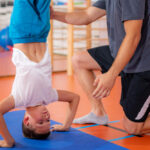
Specialized coaching also means better attention to technique. A dedicated gymnastics coach knows exactly what a proper handstand should look like at every stage of development and can spot small errors before they turn into bad habits. A generalist coach juggling multiple sports seldom develops that same level of detail.
Equipment Built for the Sport
A gymnastics gym invests in real apparatus: vault, bars, beam, rings, and properly sized floor space with correct spring and padding. Multi-sport centers often work with shared or scaled-down equipment that fits multiple activities but excels at none of them. A folding balance beam stored in a closet between basketball practices simply cannot match the quality and safety of equipment built specifically for gymnastics and left in place year-round.
This difference shows up most clearly during skill progression. Advanced skills on rings or high bar require precise, properly maintained equipment, and a center juggling five sports seldom prioritizes that level of investment in any single one. Over time, this gap becomes harder to ignore, since a child working toward more advanced skills needs equipment that can keep pace with her growing ability.
A Clear Path from Beginner to Competitive
Dedicated gyms typically offer a full pathway, from toddler gymnastics classes through recreational programs and into a competitive team gymnastics program for those who want to go further. This structure gives a child room to grow within one familiar environment for years, without needing to switch locations or coaches as skills advance.
Multi-sport centers often cap out at a basic recreational level, since building a full competitive program requires a level of specialized investment that splits poorly across several sports. Families whose children fall in love with gymnastics sometimes find themselves needing to transfer to a dedicated gym once their child outgrows what a multi-sport center can offer.
Community and Culture
A gym focused entirely on gymnastics builds a community around that shared identity. Coaches, staff, and even the front desk usually understand the sport deeply and can answer detailed questions about class placement, skill progression, and competition pathways.
That kind of specialized culture is harder to replicate in a space built to serve many different sports at once.
The Long-term View
Choosing a training environment is almost never just about the next few months of classes. A child who sticks with gymnastics for several years benefits most from a gym that has already built out every stage of that journey, from first cartwheels to competitive routines.
A multi-sport center built around convenience today may not offer the same depth of program a family needs two or three years down the road, which often means an eventual switch anyway. Starting at a dedicated gym from the beginning can save families that transition later on.
What to Consider Before Enrolling
A few questions help clarify which option fits a family best:
- Does the facility have real gymnastics-specific equipment, or shared and scaled-down gear?
- Are coaches specialized in gymnastics, or rotating across multiple sports?
- Is there a clear path from beginner classes to competitive training?
- How long has the facility operated as a dedicated program?
A Dedicated Gym Built for Real Progress
At Lana’s Gymnastics Club, gymnastics is the only thing we do, and that focus shows in every part of our program. Our coaches specialize in this sport alone, bringing decades of hands-on experience and national-level training backgrounds to every class.
Our facility features real apparatus built specifically for gymnastics, maintained to a high standard year-round, and our programs run from Mommy and Me classes through our competitive team, so your child never outgrows what we offer. With over 30 years serving Queens families, we have built a community centered entirely around helping kids grow through gymnastics.
If you want a program built specifically around your child’s development in this sport, come see the difference a dedicated gym makes. Get in touch with us today.
FAQs
Is a dedicated gymnastics gym better for beginners too?
Yes. Beginners benefit from proper equipment and specialized coaching just as much as advanced athletes do.
Are multi-sport centers cheaper than dedicated gyms?
Pricing varies by location, but cost should be weighed against coaching quality and equipment standards.
Can my child switch from a multi-sport center to a dedicated gym later?
Yes, many families make this switch once a child shows real interest in progressing further in gymnastics.
Does a dedicated gym only serve competitive athletes?
No. Dedicated gyms typically serve all levels, from toddlers in introductory classes to advanced competitive gymnasts.